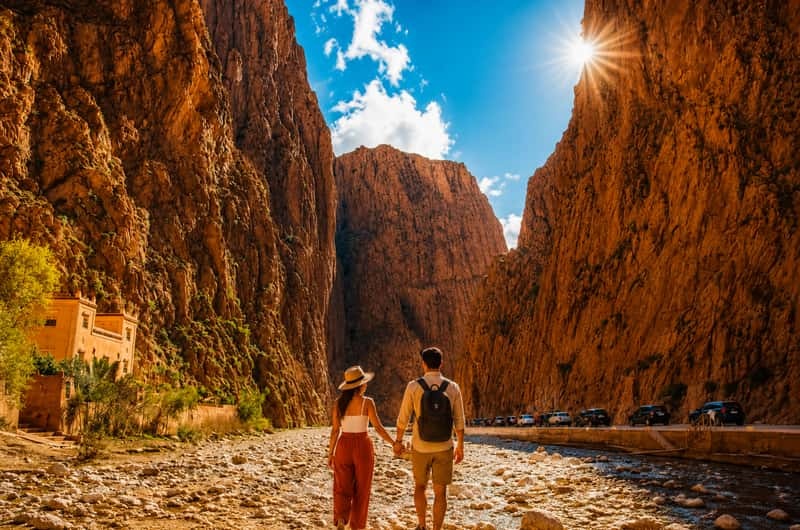
A 100-kilometre corridor of staggering beauty carved by the Dades River — ancient kasbahs, blood-red cliffs, rose gardens in bloom, and one of the world's most photographed mountain roads. This is the heart of the Moroccan south.
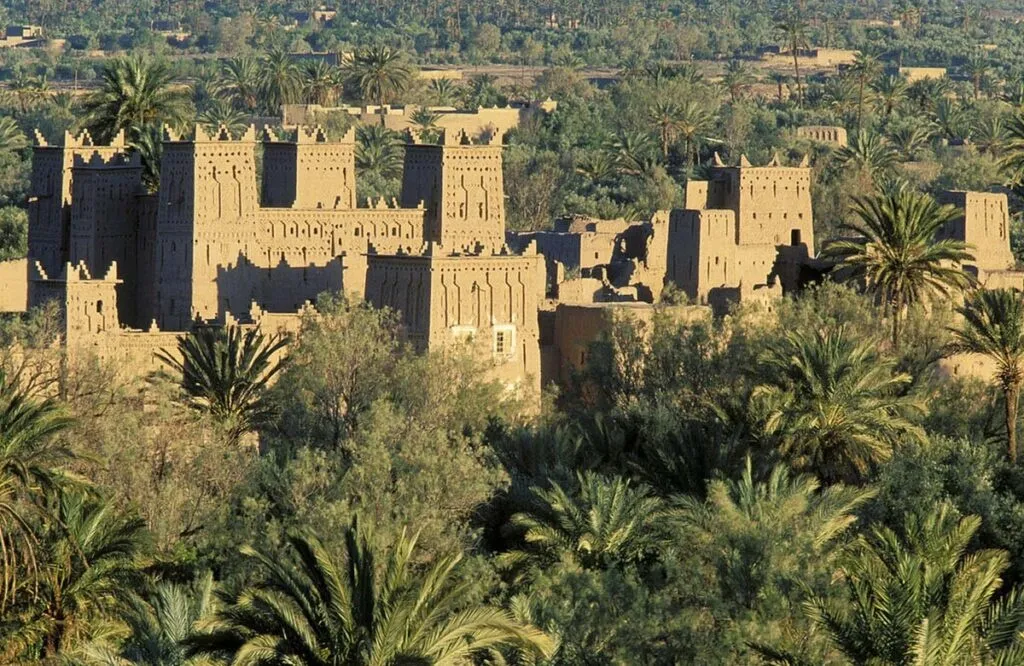
The Dades Valley — known in Arabic as Wadi Dades — stretches for nearly 100 kilometres through the southern slopes of the High Atlas Mountains, carving a corridor of extraordinary beauty between Boumalne Dades and Msemrir.
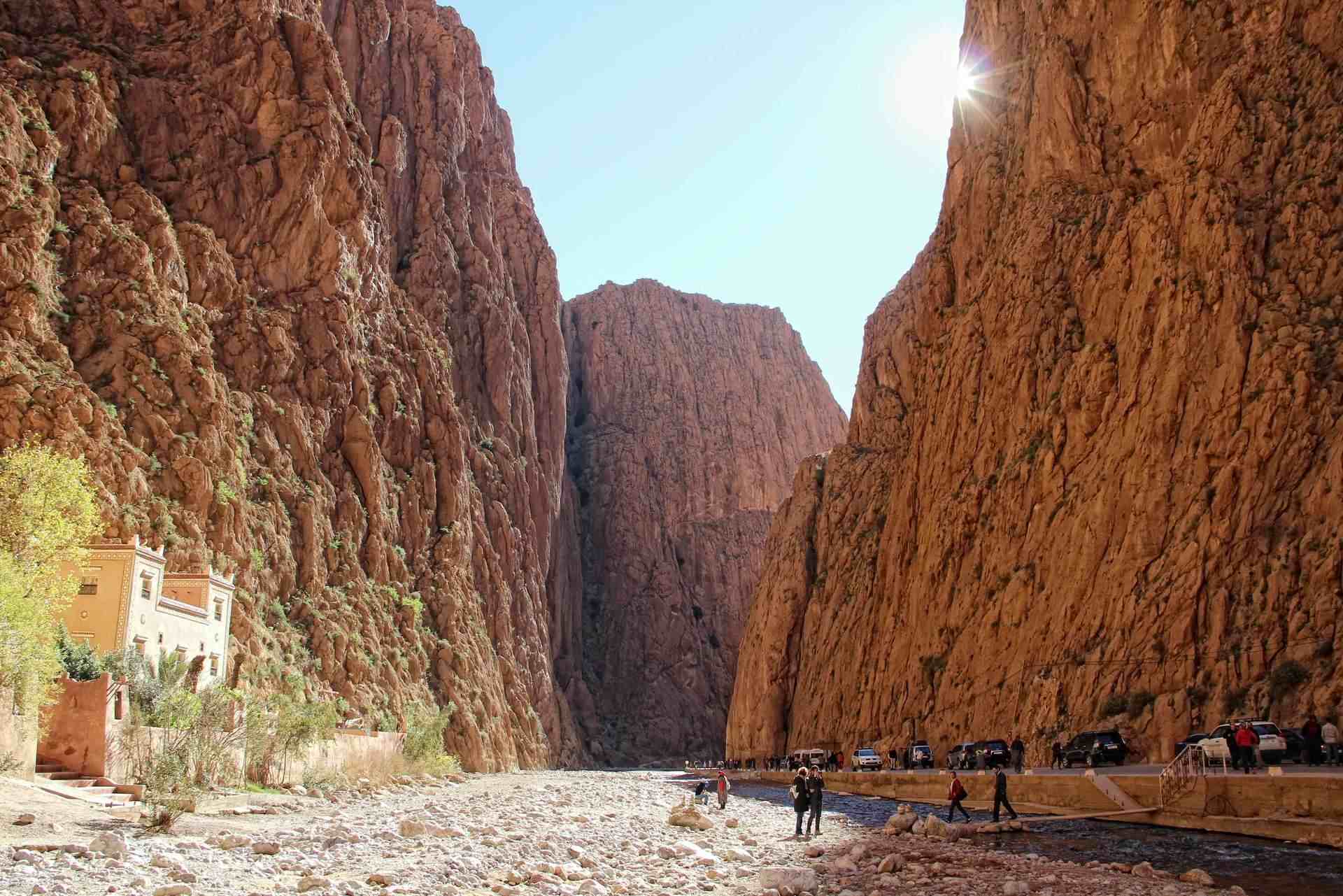
Formed over millions of years by the Dades River cutting through limestone and sandstone, the valley is flanked by cliffs that turn every shade of red, ochre and rose as the light changes through the day. At its heart lies the Dades Gorge — a narrow canyon where the rock formations are so extraordinary that geologists come from around the world to study them.
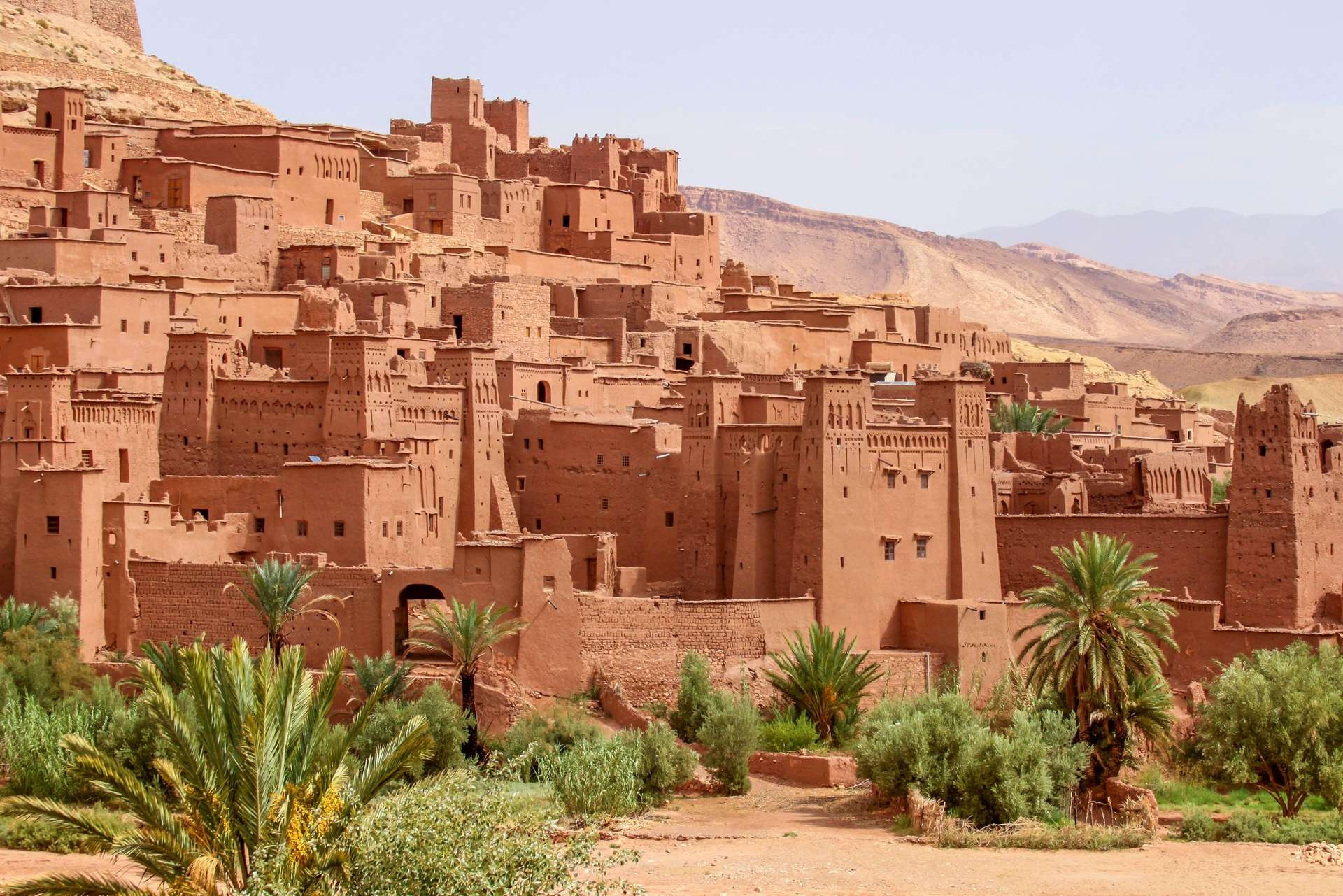
For centuries, the valley has been home to Amazigh (Berber) communities who built hundreds of mud-brick kasbahs and agadirs (fortified granaries) along the river banks. Many are still inhabited today — making this one of the rare places in Morocco where you can see ancient and modern life existing side by side in a single valley.
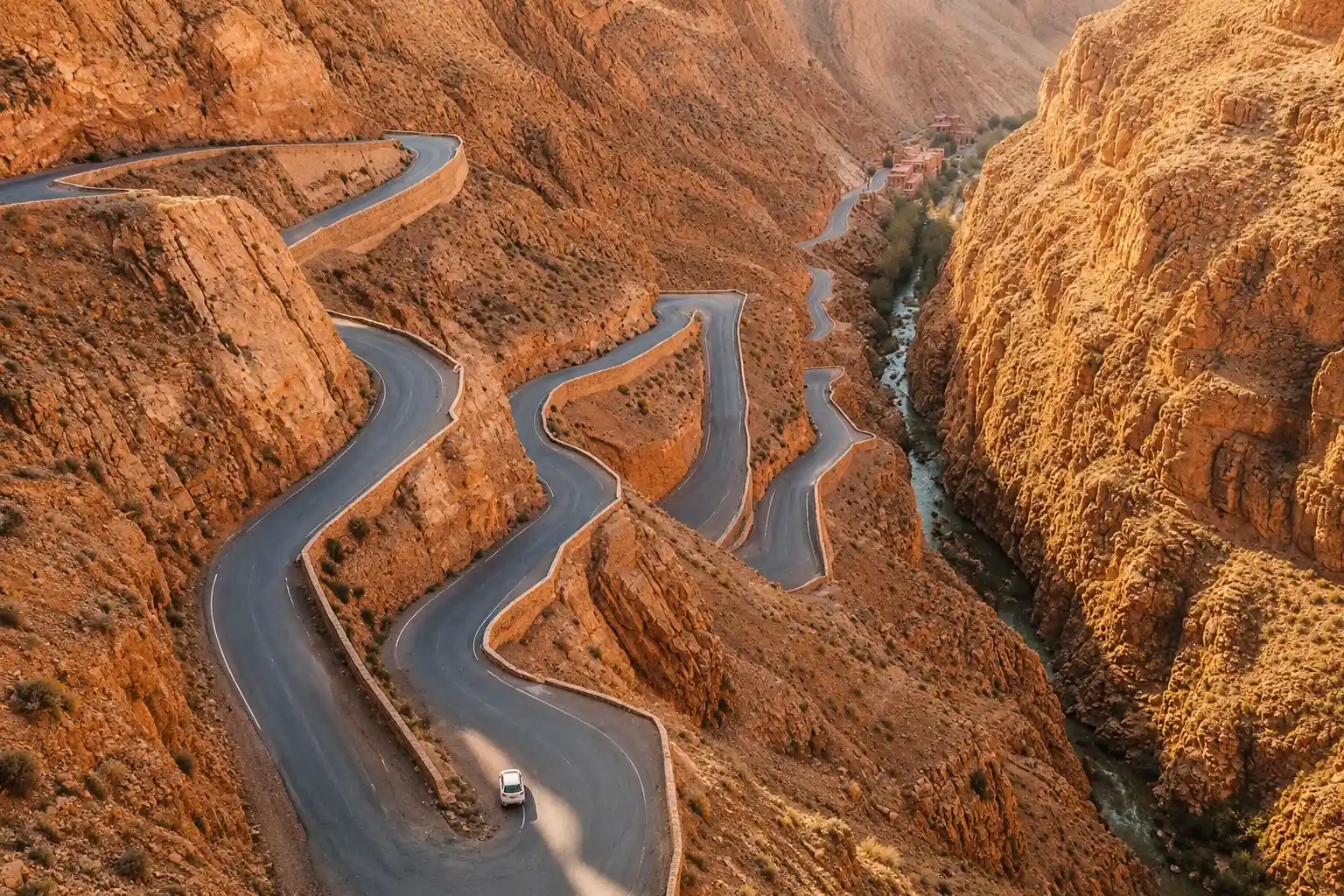
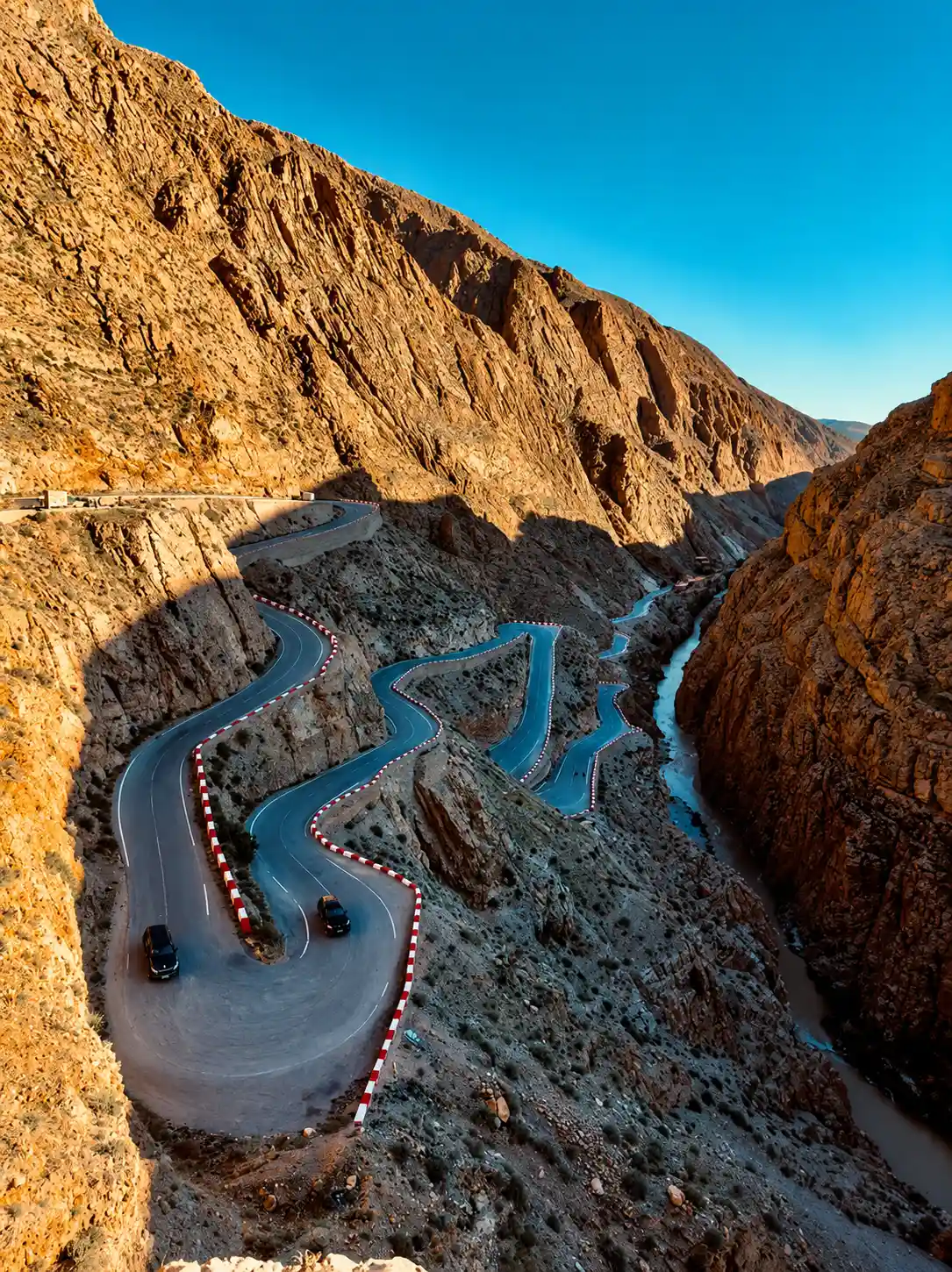
Explore Day Trips from MarrakechThe gorge begins near Aït Oudinar, where the valley walls close in and the Dades River narrows to a rushing torrent. The road that follows it is one of the most spectacular mountain drives in Africa — a series of dramatic hairpin bends carved into the cliff face, offering heart-stopping views at every turn.
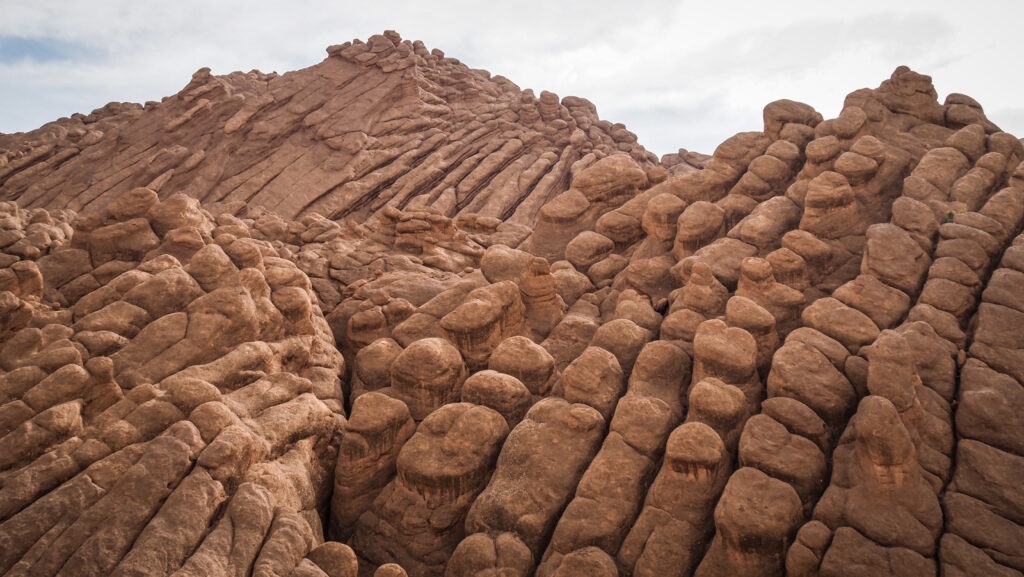
At the upper gorge, the rock formations take on extraordinary shapes. The most famous — locally known as the "Monkey Fingers" — are columns of grey-pink limestone eroded into organic, almost human forms. Geologists classify them as one of the finest examples of fluvial erosion in North Africa.
From white-knuckle mountain roads to rose-scented souks — the valley offers more than most people expect from a single destination.
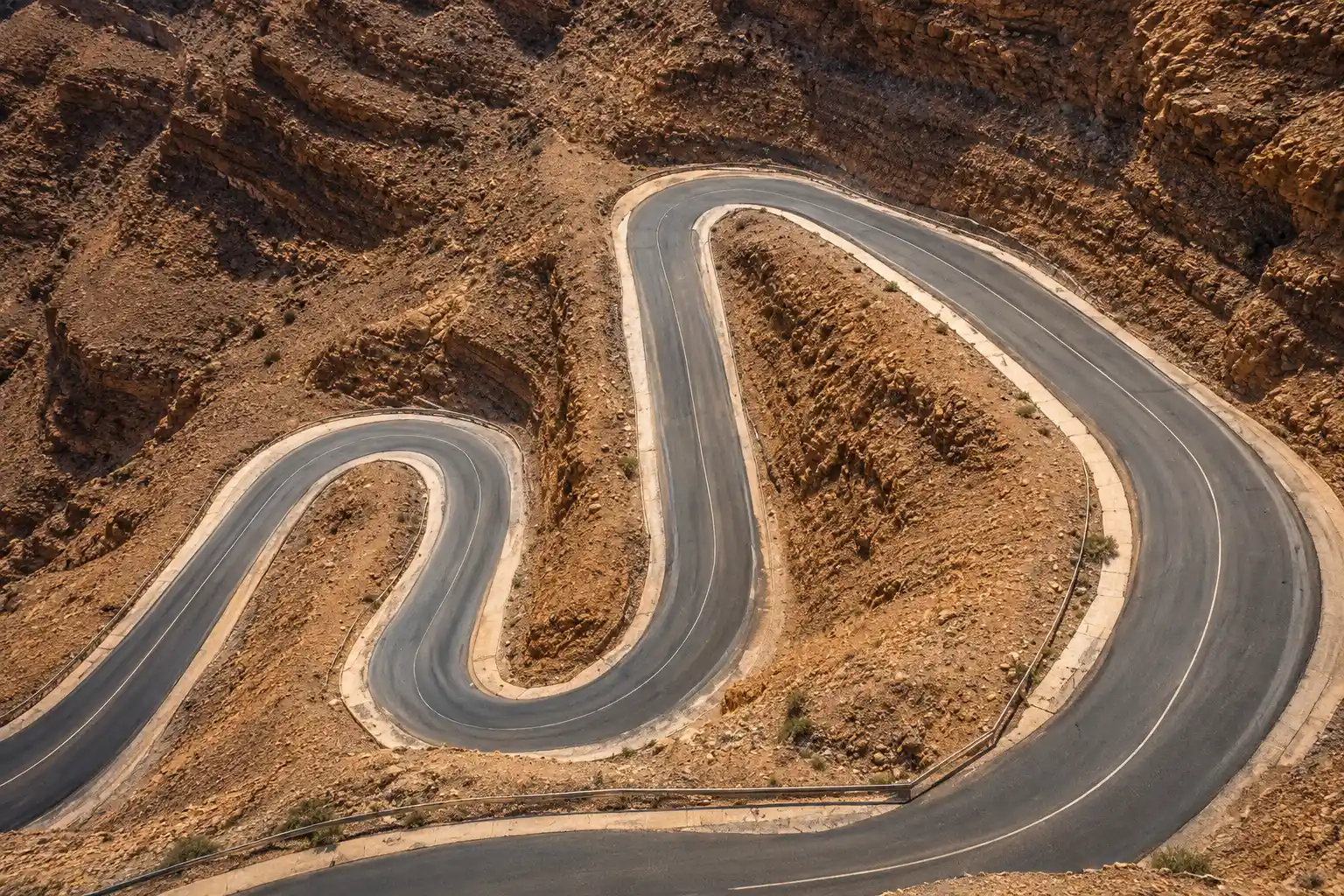
The route from Boumalne to Msemrir passes through increasingly dramatic canyon scenery. The upper section — especially the hairpin bends — is one of the most photographed roads in Morocco.
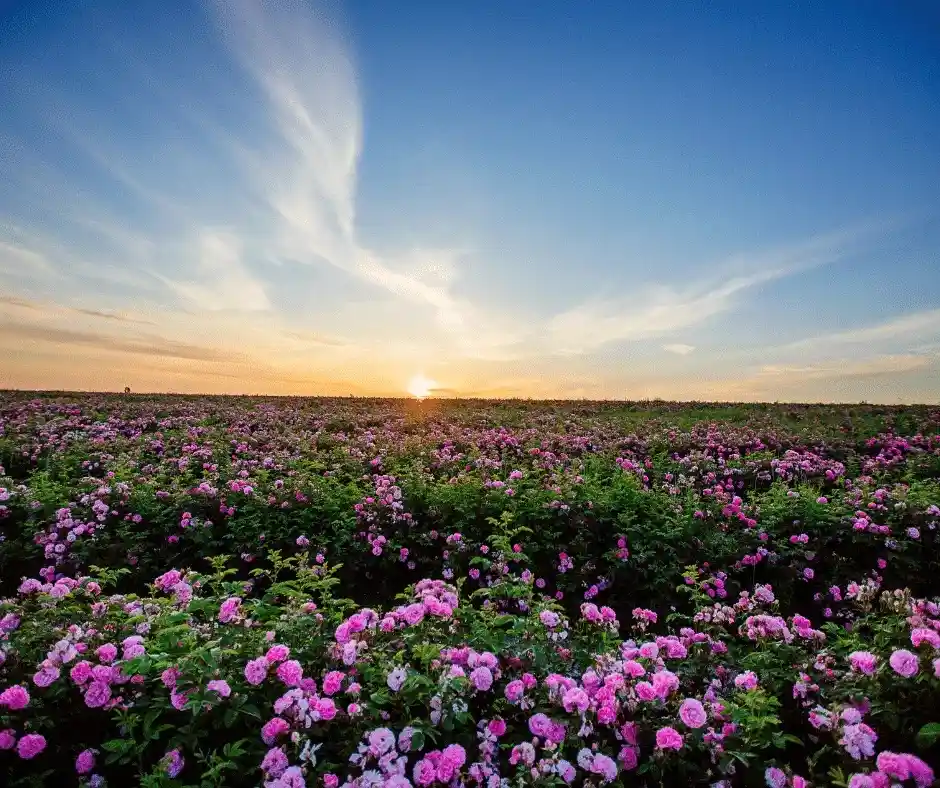
Between El Kelaa M'Gouna and Boumalne Dades, thousands of Damask rose bushes carpet the valley floor. In late April and early May the region explodes in pink — during which the Rose Festival draws thousands of visitors from across Morocco.
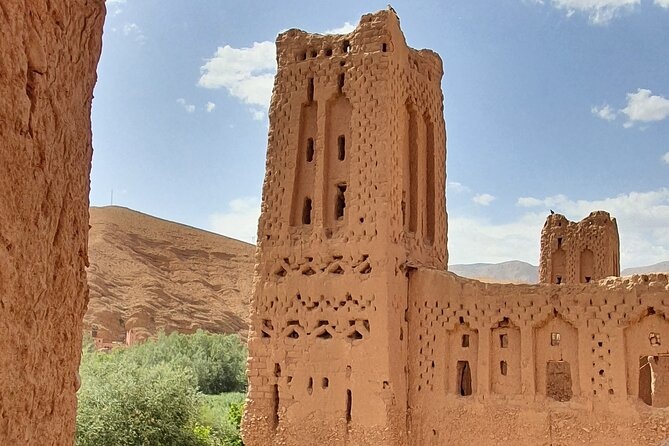
The valley is known as the Road of a Thousand Kasbahs — and the name is barely an exaggeration. Stop at Aït Arbi, Aït Youl, and the remarkable Kasbah Amerhidil to explore centuries of Amazigh defensive architecture.
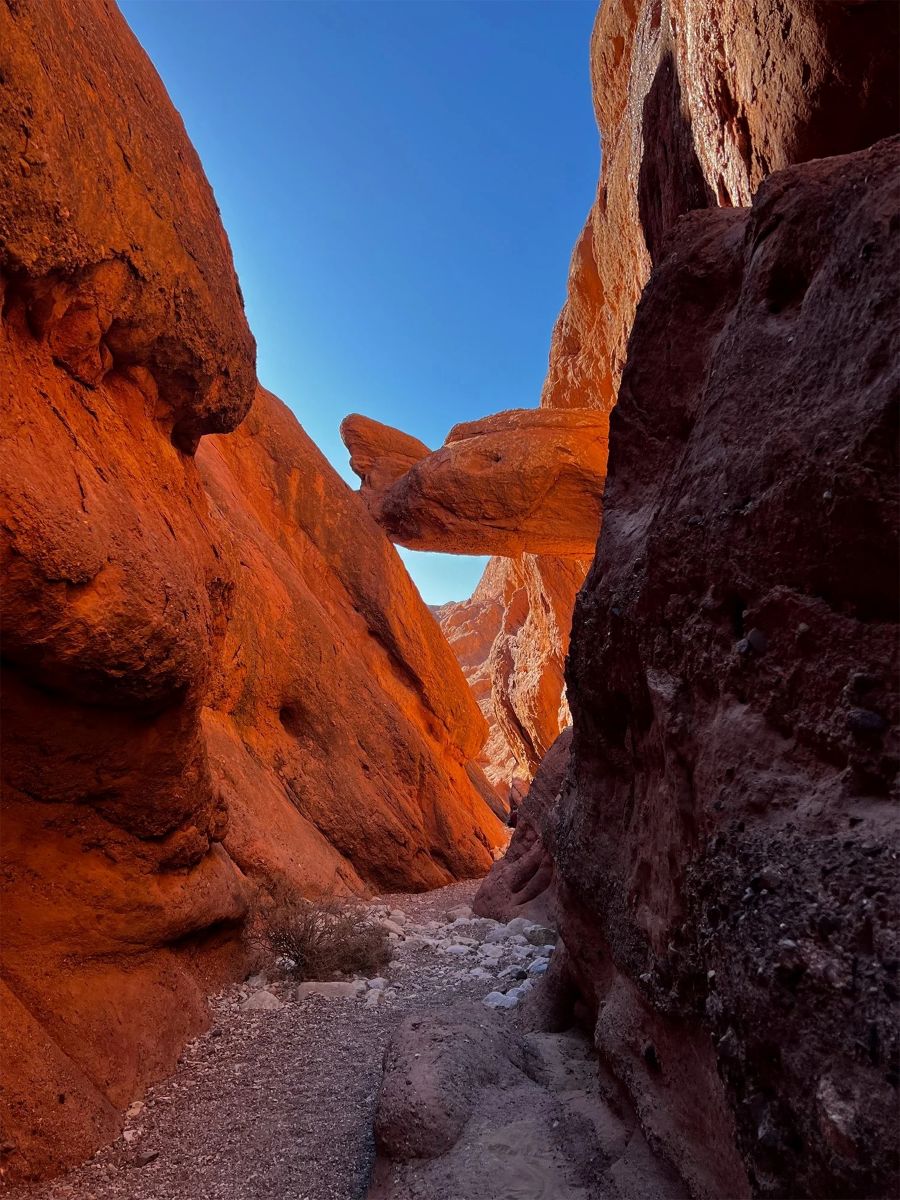
Several trails climb out of the gorge onto the plateau above, offering bird's-eye views over the entire valley. Youssef guides private half-day and full-day hikes through areas no map covers — including hidden Amazigh villages rarely seen by outsiders.
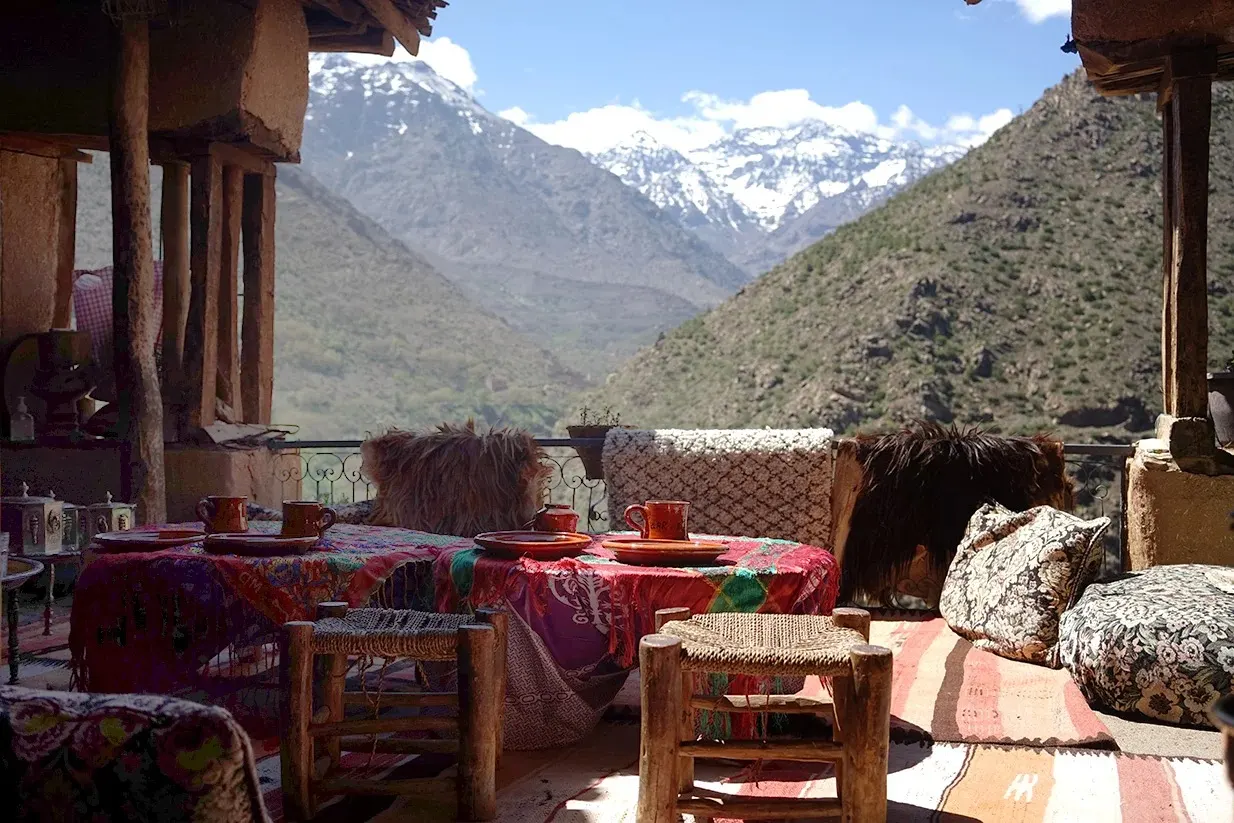
Perhaps the most memorable experience in the valley — and one only a local can arrange. Youssef's connections with families throughout the Dades mean you can share a meal, learn about Amazigh traditions, and experience the hospitality that makes this region so special.
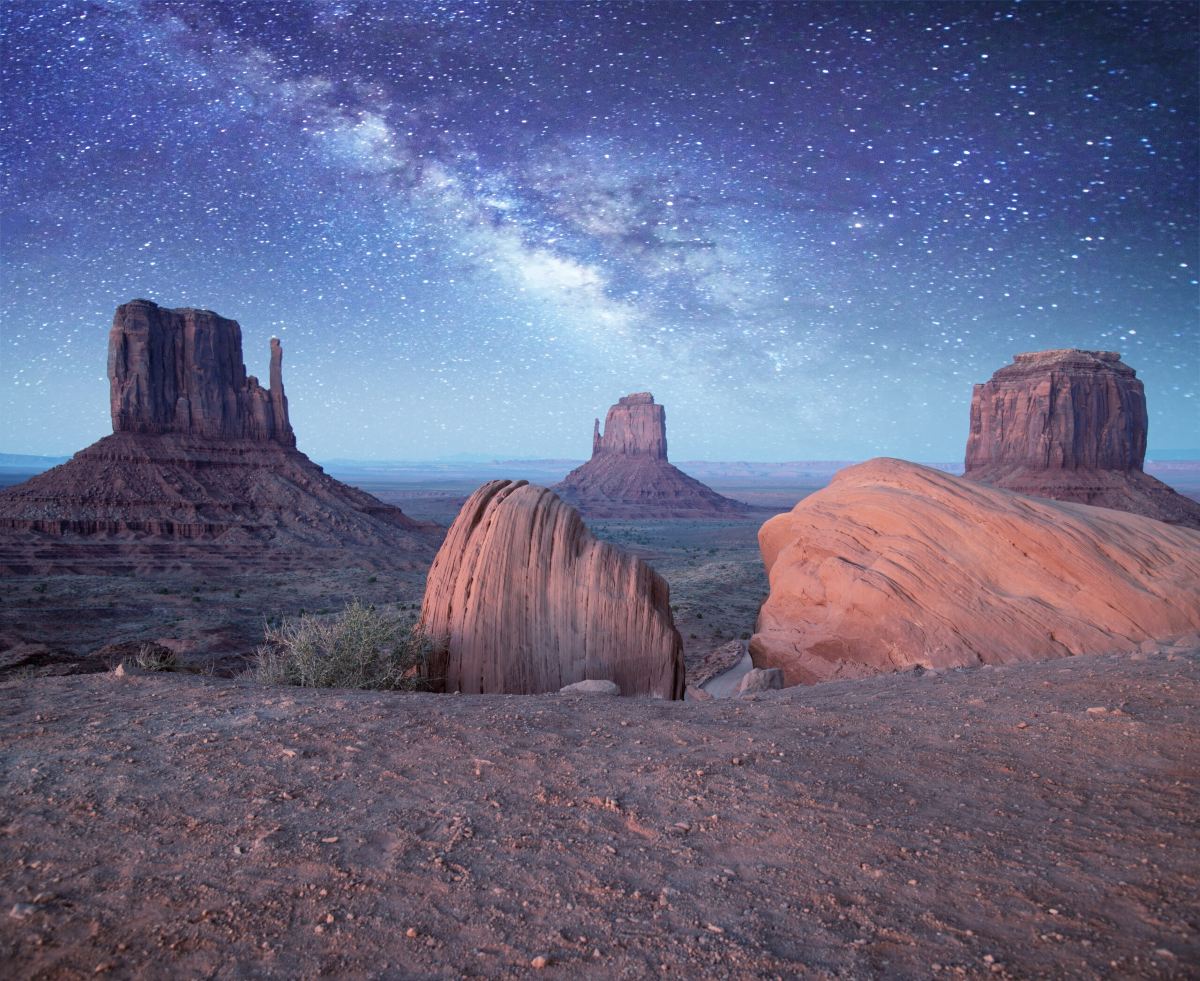
Far from any city light pollution, the Dades Gorge offers some of the darkest skies in Morocco. On clear nights — which is most nights — the Milky Way is visible with the naked eye. Stay at a local gîte and the gorge becomes your private observatory.
The valley is beautiful year-round — but the season changes everything about the experience. Here's what to expect when.
The valley's peak season. The Rose Valley blooms in late April, the gorge streams run full, and temperatures are perfect for trekking and driving. The annual Rose Festival (El Kelaa M'Gouna) takes place in early May.
Hot and dry in the valley floor, but the gorge stays cool and shaded. The upper trails are at their clearest, and the kasbahs look spectacular in the harsh summer light. Avoid midday hiking. Fewer tourists than spring.
A superb time to visit — warm days, cool nights, and the date palm harvest transforms the valley. October is particularly spectacular with golden light hitting the cliffs in late afternoon. Combine with a Sahara tour for the ultimate route.
Snow occasionally caps the High Atlas above the gorge, creating one of the most dramatic visual contrasts in Morocco — red canyon walls against white mountain peaks. Cold nights but brilliantly clear days. Ideal combined with a desert tour for crisp Sahara mornings.
The valley is accessible year-round. The most comfortable and flexible way to arrive is by private vehicle — which is exactly what Youssef provides.
The most popular route. Head south over the Tizi n'Tichka pass (2,260m) through the High Atlas, descend to Ouarzazate, then follow the N10 east through the Valley of a Thousand Kasbahs. The drive takes 3–4 hours depending on stops.
An alternative route from Marrakech via Demnat and the Aït Benhaddou kasbah, joining the N10 at Ouarzazate. Slightly longer but passes through some of Morocco's most spectacular scenery and allows a stop at the UNESCO heritage site.
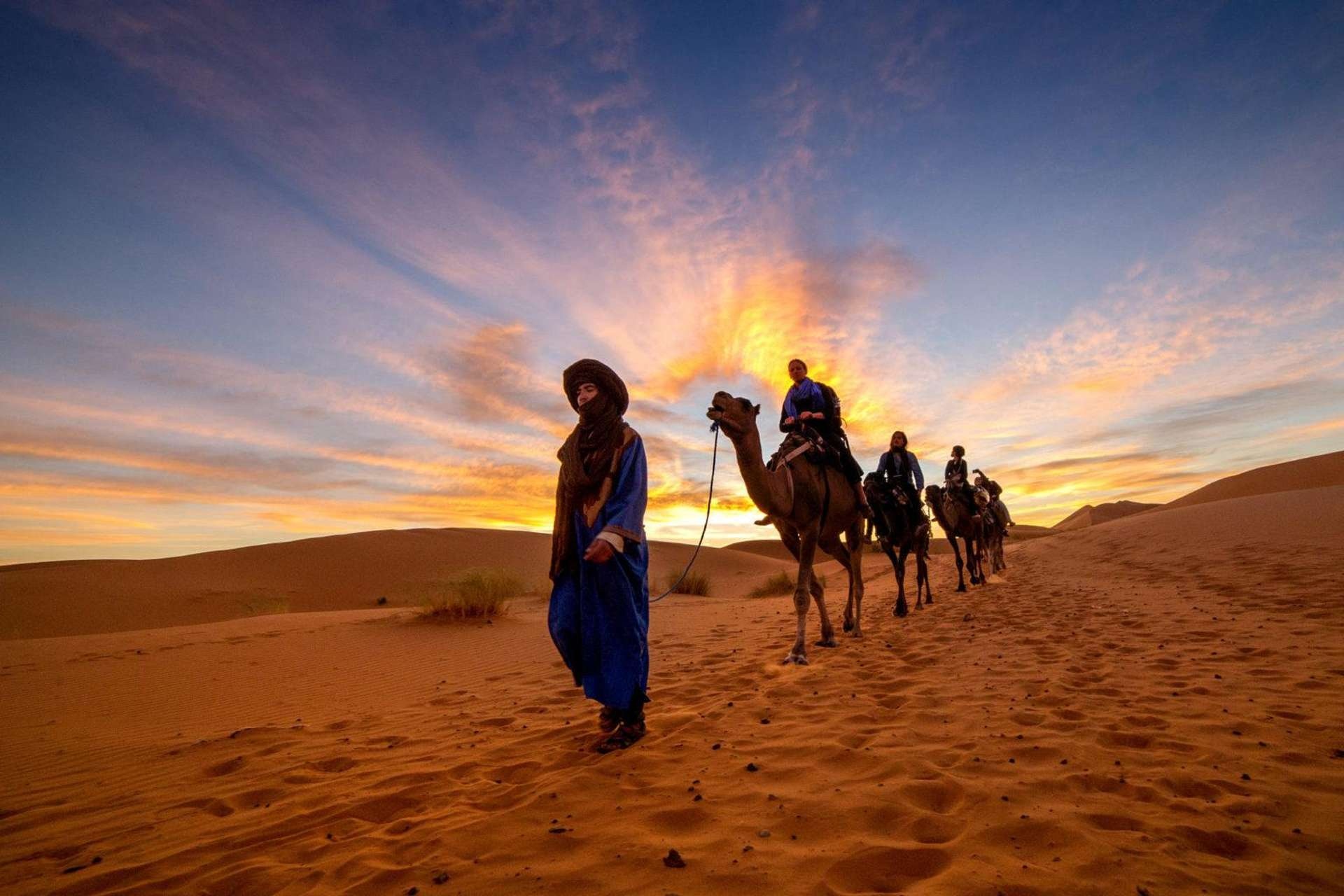
Many travellers combine the Dades Valley with a Sahara tour, approaching from the east via Merzouga and Tinghir. The drive west through the Todra Gorge and into the Dades is one of the great southern Morocco road journeys.
The easiest option — and the best. Youssef picks you up directly from your Marrakech riad in an air-conditioned 4x4, stops wherever you want along the way, and delivers you to the Dades with a local's commentary the whole journey.
After 12 years guiding travellers through this valley, here's what only a local knows.
The famous upper viewpoint over the zigzag road is crowded by 10am. Arrive before 8am and you'll have it entirely to yourself. The light is also dramatically better — long shadows fill the canyon and the cliffs glow amber.
Most day-trippers arrive, take photos, and leave. Stay one night at a local gîte inside the gorge and you'll experience the canyon completely transformed — silent, starlit, and entirely different from the daytime crowds.
Most tours stop at the famous hairpin bends and turn back. Push another 15km to Msemrir and the valley opens into a completely different landscape — wider, greener, with views of the High Atlas that most visitors never see.
The rock formations near Aït Arbi are famous, but most people photograph them in flat midday light. Return around 5pm and the setting sun turns them from grey to deep rose-pink — one of the most surreal natural light shows in Morocco.
Rose water, argan oil, and rose jam from the cooperatives in El Kelaa M'Gouna cost a fraction of the Marrakech medina price and are genuinely better quality — produced by the same women who grow the roses. Ask Youssef to take you there directly.
After the day-trippers leave, the valley is one of the quietest places in Morocco. Take a walk along the river after dinner — you'll hear nothing but water over stones and maybe a distant donkey. That silence is the real Dades.
The Dades Valley sits at the crossroads of southern Morocco's greatest sights — each within 1–2 hours' drive.
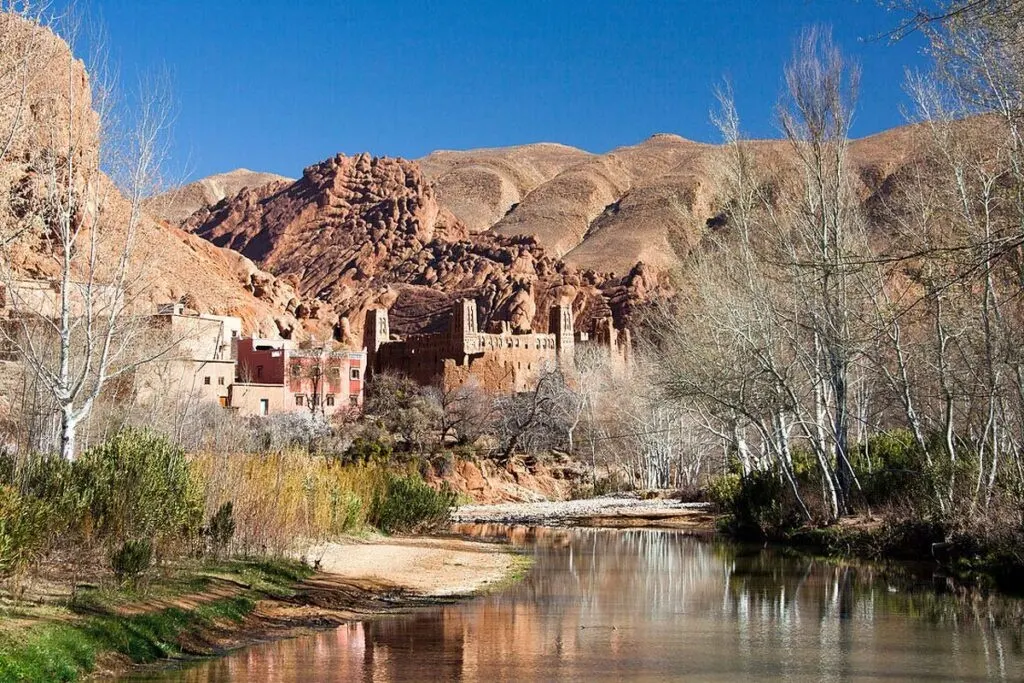
Youssef was born and raised in this valley. He knows every kasbah, every hidden trail, every family who will invite you in for tea. No guidebook gets you closer than this.
Dades Valley, Aït Benhaddou, Ouarzazate — all in one perfect day.
View Tours →Continue east from Dades to Merzouga, camels, and the Erg Chebbi dunes.
View Tours →7–14 day private tours that include Dades, the Sahara, Fes, and beyond.
View Tours →Everything about Merzouga, Erg Chebbi, and the Moroccan Sahara.
Read Guide →Your tour starts here. Everything you need to know before you go.
Read Guide →Visa requirements, packing lists, best seasons — all answered.
Read FAQ →Born in Dades Valley. 12+ years guiding. Your home advantage.
Meet Youssef →WhatsApp Youssef directly to plan your Dades Valley experience.
Get in Touch →