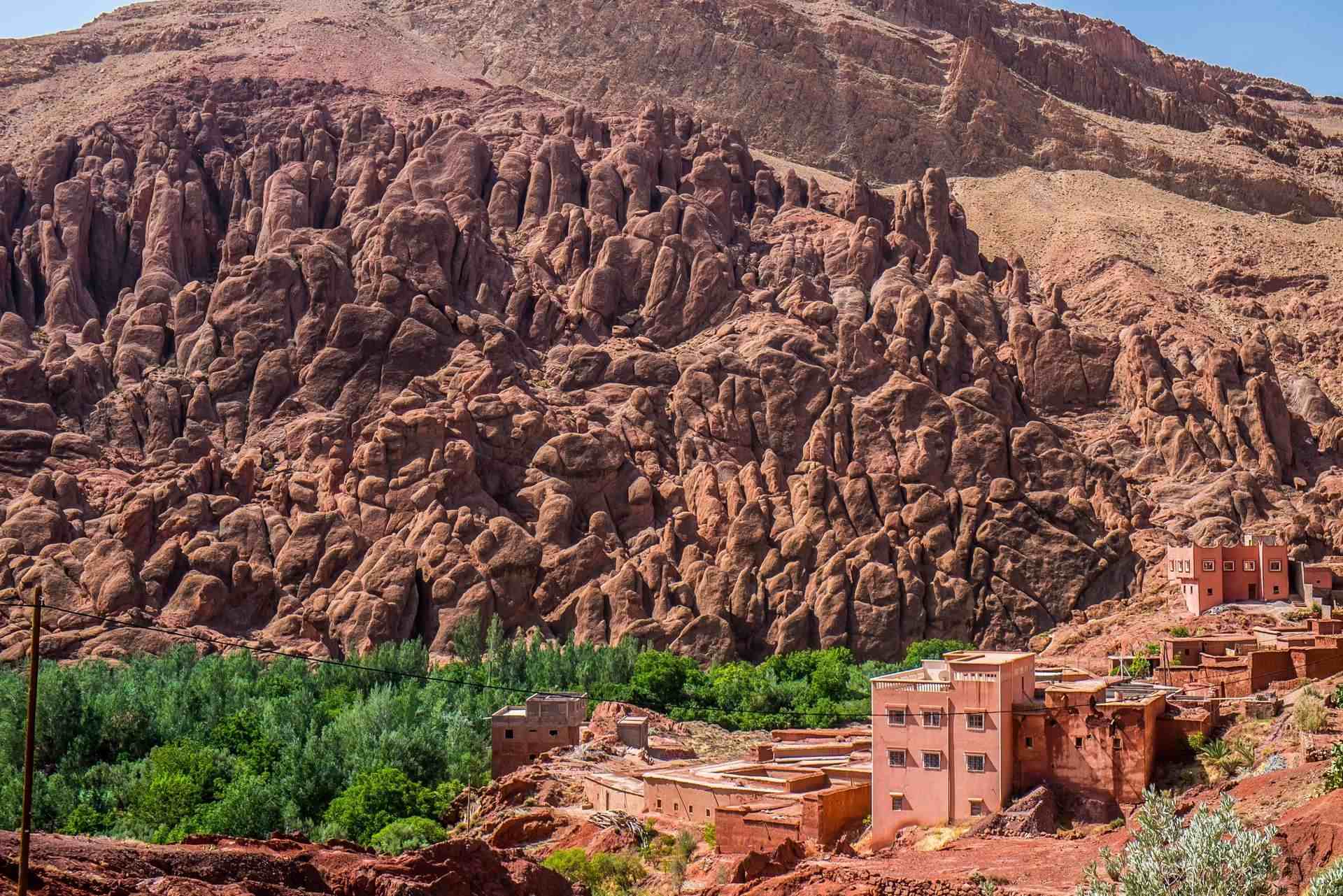
The drive from Marrakech to the Sahara Desert is one of the great road journeys in the world. It takes you over the High Atlas Mountains, past a UNESCO World Heritage kasbah, through the Valley of a Thousand Kasbahs, into the Dades and Todra gorges, and finally south to the enormous golden dunes of Merzouga — where the sand stretches all the way to the Algerian border and the night sky has so many stars it barely looks real.
But it’s also a 9-hour drive. And one of the most common mistakes travellers make is rushing it.
I’m Youssef, a local guide based in the Dades Valley, and I’ve been running Morocco desert tours from Marrakech for over ten years. In this guide I’ll explain everything you need to know before you book: which route to take, how many days you actually need, what to expect at each stop, what to pack, and how to avoid the mistakes that turn what should be an extraordinary trip into an exhausting one.
This is the most important question — and most people underestimate the answer.
2 days / 1 night: Possible, but not recommended for Merzouga. You’ll spend most of both days in the car. Some operators advertise 2-day “Sahara tours” that actually go to Zagora, not Merzouga — Zagora has small dunes and takes less time to reach, but it’s not the iconic Sahara experience most travellers picture.
3 days / 2 nights: The minimum for a proper Merzouga tour that doesn’t feel rushed. Day 1 is the drive out with stops. Night 1 at a guesthouse en route or in Merzouga. Day 2 in the desert — sunset camel ride, overnight at a desert camp. Day 3 is the return journey.
4–5 days: The sweet spot for most travellers. Allows for a proper overnight in the Dades Gorges, a morning in Todra Gorge, 2 nights in the desert, and a comfortable return. You get to actually experience the places along the route rather than rushing past them.
6+ days: For travellers who want to go deeper. Options include a one-way tour from Marrakech to Fes (passing through the best of southern Morocco without backtracking), extended time in the desert, or adding the Draa Valley and the Agdz region.
The classic Morocco desert tour from Marrakech follows this route:
Marrakech → Tizi n’Tichka Pass → Aït Ben Haddou → Ouarzazate → Dades Gorges → Todra Gorge → Merzouga (Erg Chebbi)
Total distance: approximately 550 km Total driving time (without stops): approximately 9 hours
This route is almost as spectacular as the destination. The Tizi n’Tichka pass climbs to 2,260 metres — high enough for snow in winter — with views back across the Atlas that make you feel you’re looking at the edge of Europe and the beginning of Africa at the same time.
From there the landscape changes completely. The south side of the Atlas is arid, ancient-feeling, and lined with kasbahs in reddish mud-brick that have been there for centuries. By the time you reach Merzouga, you’ve crossed from Mediterranean Morocco to the Sahara in the space of a single day.
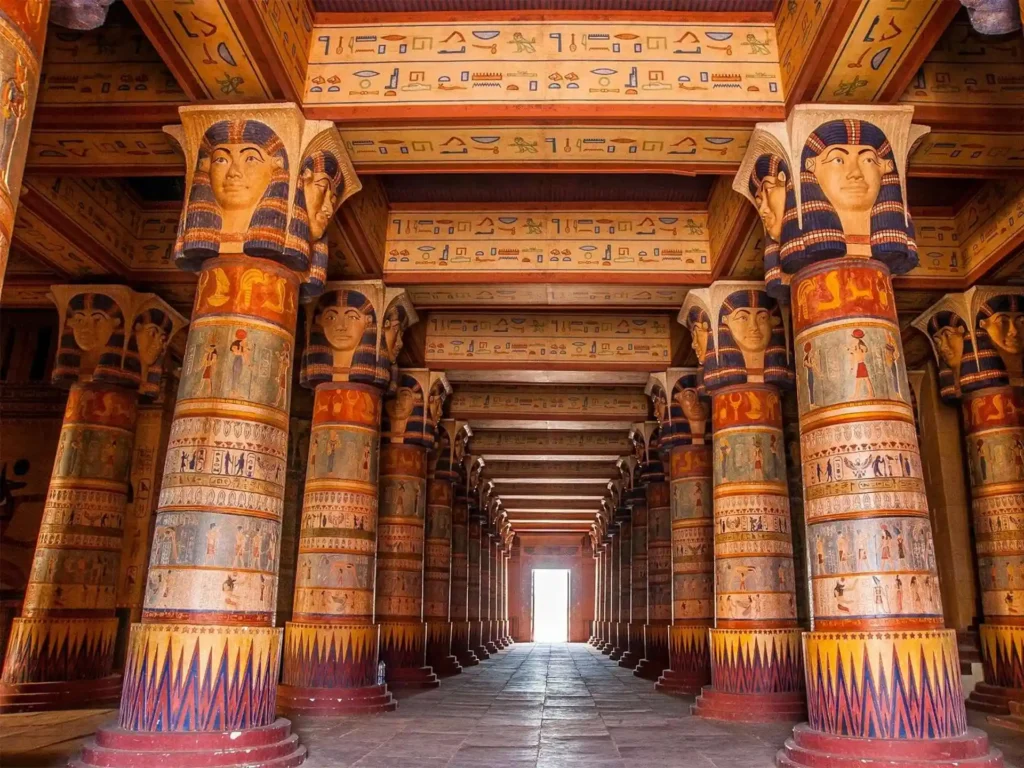
About 2 hours from Marrakech, Aït Ben Haddou is a fortified village (ksar) that has been continuously inhabited for over 1,000 years. It’s also one of the most filmed locations in the world — Lawrence of Arabia, Gladiator, Game of Thrones, and The Mummy have all used it as a backdrop.
Plan for 1–1.5 hours here. Walk through the ksar, climb to the top for the view across the valley, and have a coffee in the village below. Don’t rush this stop — it’s genuinely extraordinary.
Often called the “Hollywood of Morocco” for its film studios and production facilities, Ouarzazate is a good lunch stop. It’s also a useful logistics hub if you’re arriving by flight — the city has an international airport that’s sometimes used as an alternative to Marrakech for desert tours.
The Dades Gorges deserve more than a drive-through. If your itinerary allows it, spend a night here. The famous switchback road, the Monkey Fingers rock formation, a hike, and a meal in a Berber family’s home are all available if you take the time.
→ See our full guide to things to do in Dades Gorges
The dramatic 300-metre limestone walls of the Todra Gorge are about 1 hour east of the Dades. The narrow canyon entrance is one of the most striking natural sights in Morocco. Even a short stop of 1–2 hours is worth it — walk the main canyon, have lunch at one of the small riverside restaurants, and continue east.
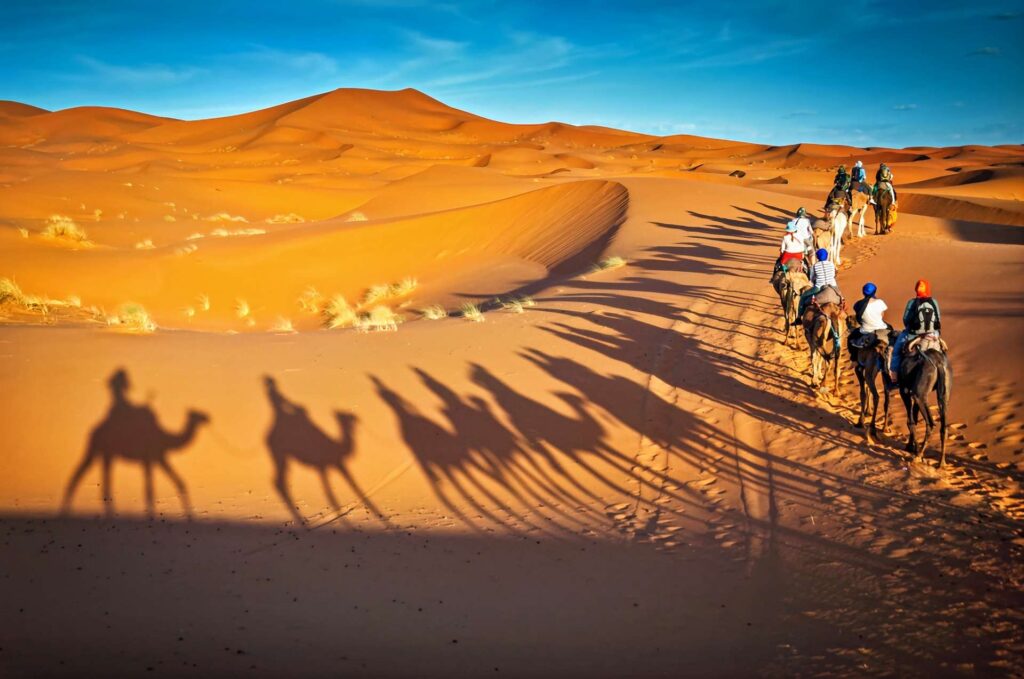
Merzouga is the gateway to Erg Chebbi — the enormous sand dune field that is most people’s mental image of the Sahara Desert in Morocco. The dunes here reach up to 150 metres high and stretch for kilometres. The sand is a shifting colour that goes from pale gold at noon to deep red at sunset.
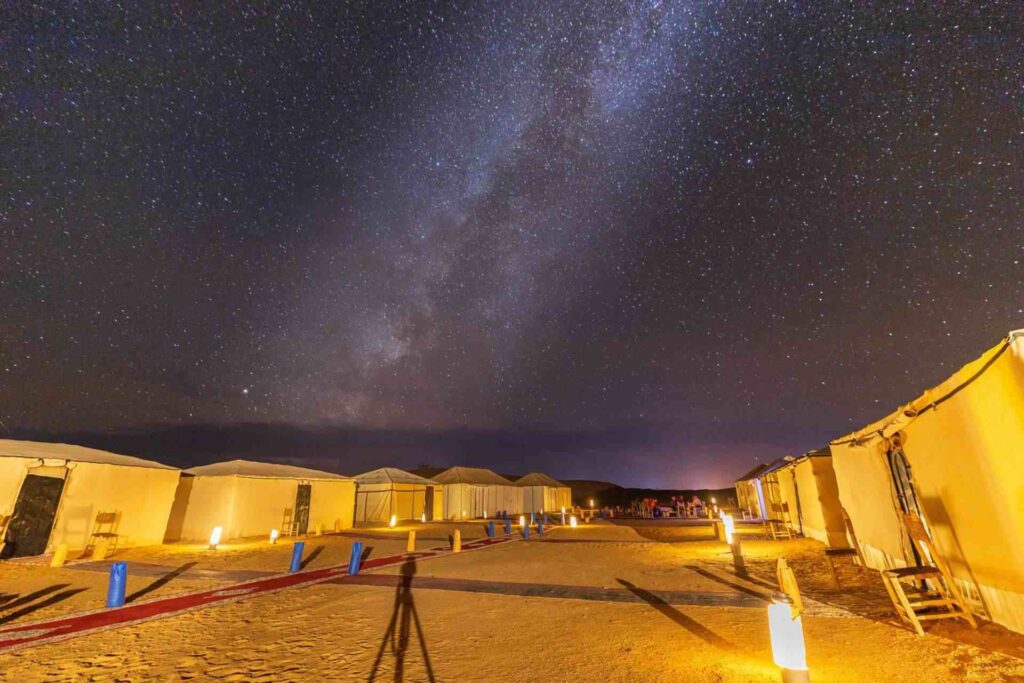
The experience most people come for: a camel trek at sunset, an overnight at a desert camp under the stars, and watching sunrise over the dunes. It lives up to the expectation every time.
Camel trekking at sunset: The classic Sahara experience. Your camel guide leads you into the dunes in the hour before sunset, positions you for the best view, and you watch the light change from gold to crimson to dark blue. The return journey is in near-darkness with a torch.
Overnight at a desert camp: Desert camps range from basic communal tents to luxury private tented accommodations with proper beds, private bathrooms, and gourmet meals. Choose according to your budget — even basic camps provide the essential experience of sleeping in the desert and waking before dawn.
Sunrise over the dunes: Wake up before dawn, climb the highest nearby dune, and watch the sun come up. The colours in the first 20 minutes of light are spectacular and the desert is completely quiet.
4×4 excursion: The flat desert around Merzouga (the hammada — stony desert) is interesting to explore by 4×4. Your guide can take you to nomad families, fossil sites, and the edge of the Algerian border.
Quad biking: Available at Merzouga for those who want more speed and independence in the dunes.
Village visits: The town of Khamlia, just south of Merzouga, is home to a community of sub-Saharan origin whose music traditions — gnawa — are extraordinary. Small concerts are available for small groups visiting the village.
Private Tour:
Group/Shared Tour:
What to avoid:
At Magical Morocco Travel, all tours are private. Youssef is your guide from pickup to drop-off — not a different driver every day.
→ See our Morocco desert tour packages
| Month | Desert Conditions | Overall Verdict |
|---|---|---|
| March – May | Perfect. Warm days, cool nights, wildflowers | ⭐ Best |
| September – November | Excellent. Post-summer, clear skies | ⭐ Best |
| December – February | Cold nights in the desert, quieter, dramatic | ✓ Good |
| June – August | Very hot in desert (40°C+), start early | △ Manageable |
Spring (March–May) is the most popular season for a reason — conditions are ideal, the Dades Valley is in bloom with roses and wildflowers, and temperatures throughout the route are comfortable for hiking and outdoor activities.
Autumn (September–November) is our second recommendation. The heat of summer has broken, visibility is excellent, and the dunes are at their most photogenic.
Winter desert tours are underrated. The daytime drive is comfortable, the dunes are quieter, and the desert nights are dramatic — cold and crystal clear. Pack warm layers for the evenings.
Summer is possible but requires planning around the heat. Start drives before 7am, schedule outdoor activities for early morning and late afternoon, and expect the desert midday to be extremely hot.
Clothing:
Essentials:
Don’t bring:
Check the operator’s reviews: Look for consistent 4.5+ star reviews on Google, TripAdvisor, or Facebook over a period of months. A high volume of recent reviews is a good sign.
Confirm the destination: If the operator says “Sahara tour” without specifying Merzouga, ask. Make sure your 3-day tour goes to Erg Chebbi at Merzouga, not to Zagora.
Ask who your guide is: A good tour company can tell you who your guide will be, where they’re from, and what their experience is. This matters — a local guide who grew up in the Dades Valley will show you things an agency driver from Marrakech won’t know.
Understand what’s included: Accommodation, meals (which ones), camel trek, entrance fees. Get this in writing before you pay.
Flexibility: Can the itinerary be adjusted? If something takes your interest — a Berber village, a kasbah — can you spend longer? A good private tour gives you this freedom.
At Magical Morocco Travel, every tour is private, fully customisable, and led by Youssef — a local guide who knows this route better than anyone. WhatsApp us before you book and we’ll build an itinerary around exactly what you want to see.
→ Get in touch to plan your Morocco desert tour
How long is the drive from Marrakech to Merzouga? About 9 hours of driving time, not including stops. With the recommended stops at Aït Ben Haddou, Ouarzazate, and the Dades Gorges, expect 2 days of travel to reach the desert on a 3-day tour.
Is it possible to do a 2-day desert tour from Marrakech? It’s possible but not recommended for Merzouga — you’ll spend most of both days in the car. 2-day tours typically go to Zagora, which has smaller dunes. For the iconic Sahara experience, plan for at least 3 days.
What is included in a Morocco desert tour? Typically: private transport, accommodation (guesthouses and desert camp), daily breakfasts and dinners, camel trek at sunset, and guide services. Lunches, entry fees, and tips are usually extra. Always confirm what’s included before booking.
Do I need travel insurance for a Morocco desert tour? Yes, strongly recommended. Ensure your policy covers the High Atlas (some altitude in the Tizi n’Tichka pass) and outdoor activities if you plan to hike.
What should I expect at a desert camp? Desert camps range from communal tents with shared facilities to luxury private tents with ensuite bathrooms. Most mid-range camps offer private tents with real beds, hot showers, dinner around a campfire, and live music. The shared experience of sleeping in the desert is the same at any level.
Is a Morocco desert tour from Marrakech suitable for children? Yes, with the right planning. The drives are long but broken up with interesting stops. Camel trekking and the desert camp are genuinely exciting for children. Discuss your family’s needs with your guide before booking.
What is the best Sahara destination from Marrakech — Merzouga or Zagora? Merzouga (Erg Chebbi) has the iconic high dunes most people picture when they imagine the Moroccan Sahara. Zagora has smaller dunes and is closer to Marrakech. For the full experience, choose Merzouga and allow at least 3 days.
A Morocco desert tour from Marrakech is one of the most rewarding journeys you can take anywhere in the world. The route alone — over the Atlas, through the Valley of Kasbahs, into the gorges, and south to the dunes — is extraordinary.
But how much you get out of it depends on how you plan it. Take enough days. Choose a private tour with a local guide. Stop properly at the places along the route rather than treating them as interruptions to the drive.
The Dades Gorges, in particular, deserve a night of your itinerary — the hiking, the Berber villages, and the stargazing here are as good as anything you’ll find at the dunes.
If you’re ready to start planning, WhatsApp Youssef directly. He’ll build you an itinerary based on your dates, interests, and budget — no call centre, no middleman.
→ Plan your Morocco desert tour → WhatsApp: +212 723-047402 → See all Morocco desert tour packages