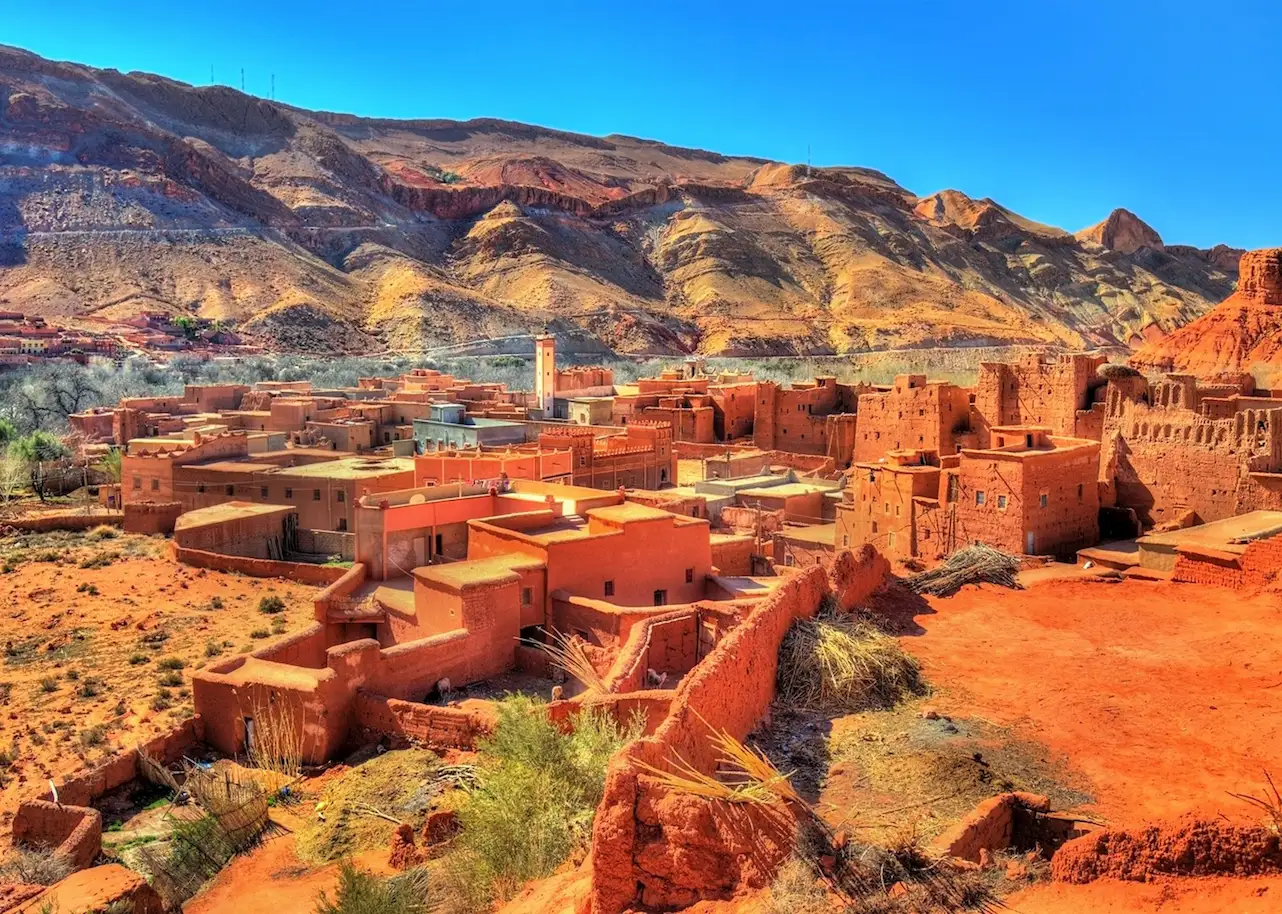
Most people who drive through the Dades Gorges see the famous winding road, take a few photos, and keep moving. They have no idea what they’ve just missed.
The Dades Gorges — carved by the Dades River through the High Atlas Mountains over millions of years — are one of Morocco’s most extraordinary places. Towering canyon walls in shades of red, orange and ochre. Ancient Berber villages tucked into the cliffs. A sky at night so thick with stars it barely looks real. If you’re looking for the best things to do in Dades Gorges, you’ve come to the right place.
I’m Youssef, a local guide who was born and raised in this valley. In this guide I’ll take you through everything worth doing here — from the famous hikes and rock formations to the cultural encounters most tourists never find.
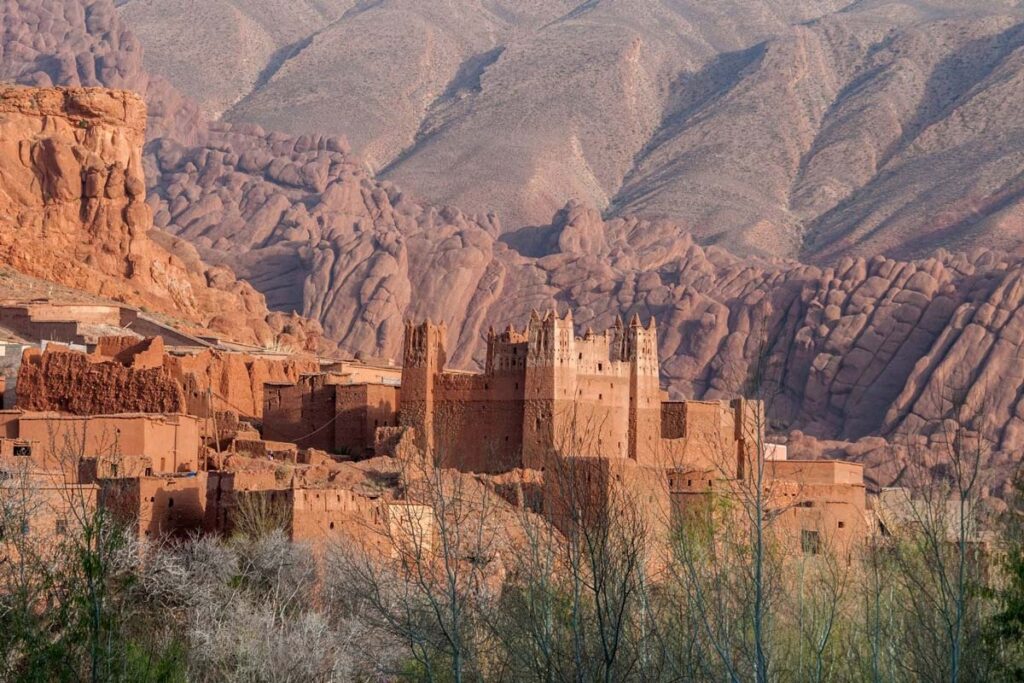
Hiking is the best way to understand the Dades Gorges. The canyon floor trail follows the Dades River through palm groves, past ancient kasbahs, and between canyon walls that change colour as the light shifts through the day.
There are routes for every level:
Easy (2 hours): The riverside walk from the village of Aït Oudinar follows a flat path through date palms and rose gardens. You’ll pass Berber families working their terraced plots. The sound of the river and the scale of the canyon walls above you makes this one of the most peaceful walks in Morocco.
Moderate (4–5 hours): The gorge canyon loop climbs past the Monkey Fingers rock formations, reaches the upper canyon viewpoints, and descends through a Berber village where you stop for mint tea. This is the route most guests ask for, and the one that tends to make people say it was the best day of their trip.
Challenging (7–8 hours): The full-day plateau trek is for strong walkers who want to reach the high ridge above the gorge. The views from the top — Dades Gorge below, the Atlas peaks behind, the start of the Sahara in the distance — are unlike anything else in Morocco.
All trails are best done with a local guide. The paths aren’t marked, some sections require local knowledge to navigate safely, and frankly, the stories you hear along the way are half the experience.
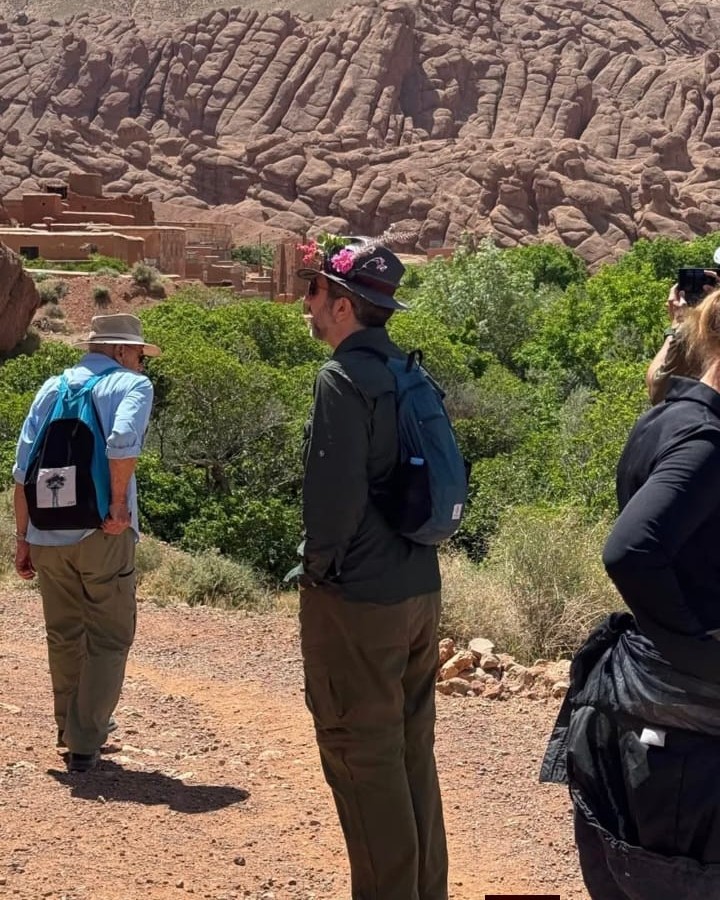
About 27 km into the gorge, the canyon does something extraordinary. The walls suddenly give way to a cluster of eroded limestone columns that look like a giant’s fingers reaching up from the earth. Locals call them “Les Doigts de Singe” — the Monkey Fingers.
These formations were created as the Dades River carved through layers of softer and harder rock at different rates, leaving these strange pinnacles standing while everything around them eroded away. The result is one of Morocco’s most photogenic and surprising geological sights.
The best time to see them is at sunset, when the low light turns the rock from ochre to a deep, burning red. If you’re staying overnight in the gorge, the Monkey Fingers by moonlight are worth setting an alarm for.
A guided walk around and through the formations takes 1–2 hours. Your guide will position you at the angles that most photographers miss, and tell you the local legends that give these rocks their name.
The Dades Gorges are not just a natural landscape — they’re a living community. Amazigh (Berber) families have farmed these narrow terraces, tended these rose gardens, and built these kasbahs for centuries. Visiting them is one of the most memorable things you can do here.
The difference between visiting with a local guide and passing through on your own is significant. When you arrive with someone who grew up in the valley, who knows these families by name, doors open. You end up sitting in someone’s home, drinking tea, hearing about the rose harvest or the almond blossom season, or watching a grandmother weave a carpet on a loom that’s been in her family for generations.
Key villages worth visiting:
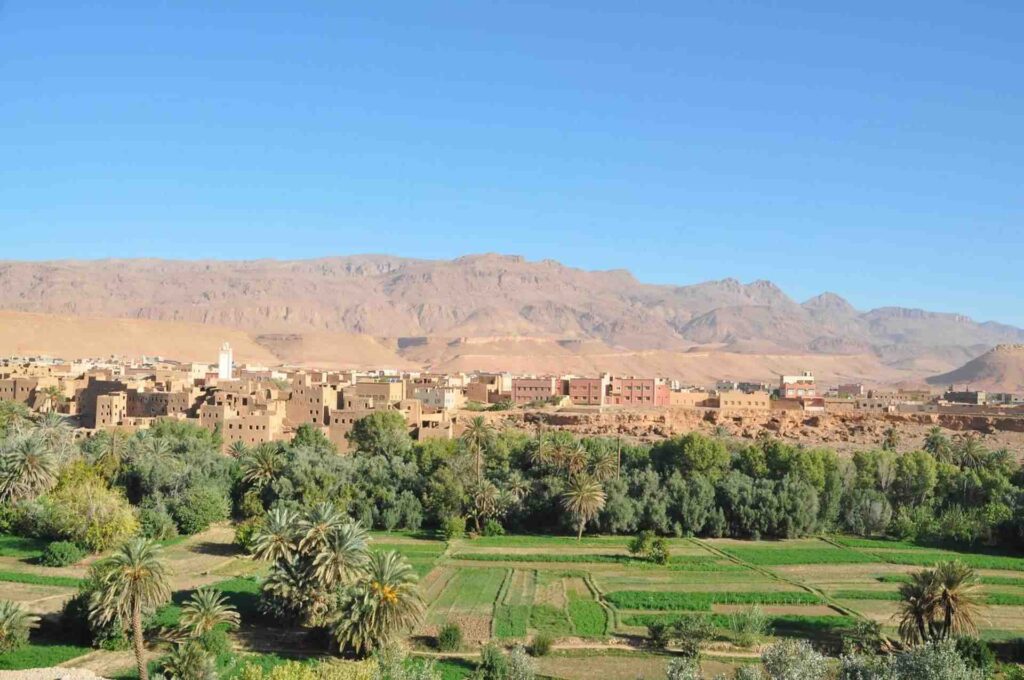
The paved road through the Dades Gorges ends — and then the real adventure begins.
Beyond the point where most tourist vehicles turn around, the upper gorge opens up into some of the most remote and dramatic landscape in southern Morocco. Piste tracks thread through narrow canyons, climb to high plateaus, and link villages that see very few outside visitors.
A private 4×4 with an experienced local driver-guide gives you access to:
Day trips can combine the gorge floor with a high-piste loop. Multi-day tours link the Dades Gorges to Todra Gorge, and from there south to the dunes of Merzouga and the Sahara.
The Dades Gorges are made for photography. But the best shots aren’t from the roadside parking spots — they’re from viewpoints that require local knowledge to find.
The top of the famous switchback road offers a classic panorama. But there’s a ledge above the Monkey Fingers that most visitors walk straight past, a cliff track above Aït Oudinar that gives you the whole gorge in one frame, and a sunset spot at the canyon rim where the light turns everything gold for exactly fifteen minutes.
Youssef knows all of them, and times the day accordingly.
Best photography times:
Some of the best experiences in the Dades Gorges aren’t on any itinerary. They happen because your guide knows the right people.
A carpet weaver who’s happy to show you how the traditional patterns are made. A spice seller at the Thursday souk who explains which plants grow in which part of the valley. An elderly man who remembers when the rose harvest was the biggest event of the year and the whole valley smelled like perfume for two weeks in May.
The Dades Valley is also Morocco’s rose-growing heartland. The Damask roses that produce some of the world’s most prized rose oil are harvested in April and May, before sunrise, when the fragrance is strongest. The rose cooperatives in the valley welcome visitors year-round and explain the distillation process — the Valley of Roses makes for an excellent half-day addition to a gorge visit.
Lunch in the Dades Gorges is not a meal — it’s an experience.
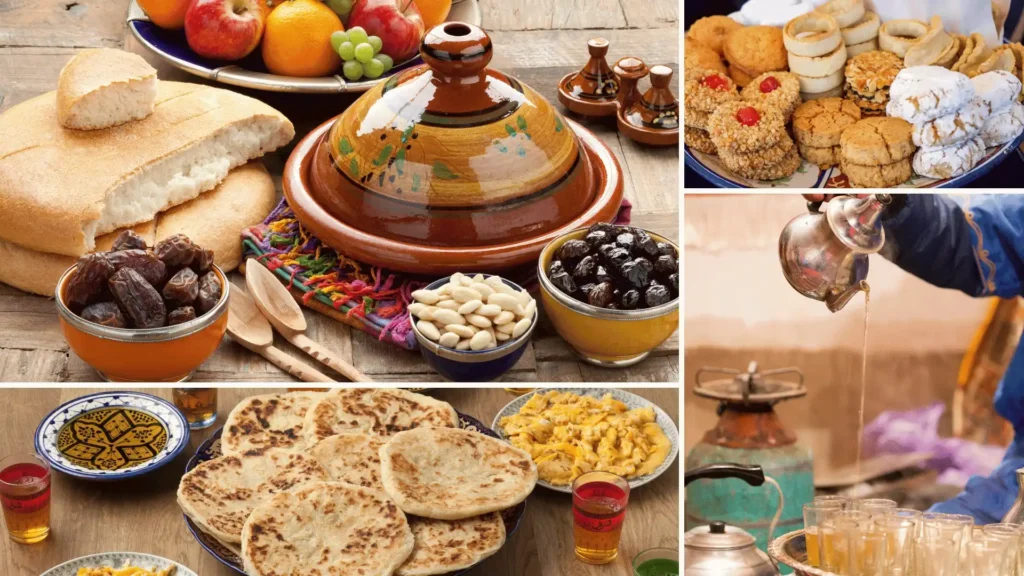
A traditional Berber lunch in a family home means a slow-cooked lamb tagine that has been simmering over charcoal since morning, fresh salads made from vegetables grown in the garden below the house, warm msemen flatbread with argan oil and wild honey, and enough mint tea to keep you going for the rest of the day.
The setting matters as much as the food. A low table in a shaded courtyard, the sound of the river close by, the canyon walls above you. This kind of lunch is included in all full-day tours with Youssef, and guests consistently say it was the part of the day they’ll remember longest.
Stay for the evening. It’s worth it.
The hour before sunset is when the gorge becomes spectacular. The canyon walls — layers of red, orange and ochre limestone — catch the low sun at an angle that makes them seem to glow from inside. The famous switchback road at this hour looks like it was designed specifically to be photographed.
After dark, the altitude and total absence of light pollution reveals a night sky that most of the world has lost access to. The Milky Way is a visible, physical thing — not a faint smudge but a dense river of light crossing the sky from one canyon rim to the other. On a clear night you can see Saturn’s rings with the naked eye.
Youssef names the constellations using both Western and traditional Amazigh star names — the same names that desert caravan guides used to navigate these routes for centuries.
The gorge trail network is one of southern Morocco’s most underrated cycling destinations.
Rocky singletrack through narrow canyon sections, open piste stretches with views that make you forget to pedal, steep descents where the canyon walls blur on either side. Bikes and helmets can be arranged on request — this is an add-on activity that works well combined with a half-day hike on the same day.
The descent from the upper gorge is the highlight. Intermediate cyclists will find it perfectly pitched — technical enough to be exciting, never so difficult that you spend the whole time staring at the ground instead of the scenery.
| Season | Conditions | Verdict |
|---|---|---|
| Spring (Mar–May) | Mild temps, wildflowers, rose harvest | ⭐ Best |
| Autumn (Sep–Nov) | Clear skies, cooler air, harvest colours | ⭐ Excellent |
| Summer (Jun–Aug) | Hot midday, hike early/late | ✓ Manageable |
| Winter (Dec–Feb) | Cold nights, snow on Atlas peaks, fewer crowds | ✓ Atmospheric |
Youssef offers pickup from Marrakech, Ouarzazate, or your accommodation. All tours are private — no strangers added to your group.
→ Contact us to plan your Dades Gorges tour
How long should I spend in the Dades Gorges? A minimum of one full day to see the highlights. Two days allows you to combine hiking, 4×4 adventures, and a sunset/stargazing experience without rushing. Three or more days lets you explore the upper gorge and connect to Todra Gorge.
Do I need a guide in Dades Gorges? For viewpoint stops and the scenic drive, no. But for hiking — yes. Trails are unmarked, and a local guide significantly improves the experience with context, stories, and access to Berber homes that you simply won’t get on your own.
Is Dades Gorges suitable for families with children? Yes. The easy riverside walk is perfect for families. The Monkey Fingers hike works well for children over 8. The 4×4 upper gorge tour is excellent for all ages.
What is the Monkey Fingers rock formation? A cluster of eroded limestone pillars near the village of Aït Arbi, about 27 km into the gorge. They’re named for their resemblance to giant fingers reaching upward. Best visited at golden hour when the rock glows red.
Can I visit Dades Gorges and Todra Gorge on the same trip? Yes, and it’s highly recommended. The gorges are about 1 hour apart and offer very different experiences. Many 3-day tours combine both as part of a desert route from Marrakech.
What should I pack for a day in the Dades Gorges? Comfortable walking shoes, sunscreen, sunglasses, a wide-brim hat, 1.5–2L of water per person, lightweight layers (the canyon shade is cool even in summer), and a camera.
Is the Dades Gorges road safe to drive? Yes, the main R704 road is paved and safe. The famous switchback section is narrow but perfectly driveable at slow speed. Beyond the gorge, piste roads require a 4×4.
The Dades Gorges are one of those places that rewards the people who go deeper. The famous winding road is beautiful. But the hikes, the Berber villages, the meals in family homes, the Monkey Fingers at sunset, and the Milky Way above the canyon rim — those are the things that stay with you.
If you’re planning a visit and want to make the most of your time in the gorge, get in touch. As a local guide who has spent his life in this valley, Youssef knows every trail, every viewpoint, and every family worth visiting.
→ Plan your Dades Gorges experience with Magical Morocco Travel → WhatsApp Youssef directly: +212 723-047402